
Engineered Flooring
Our engineered flooring combines a thick wear layer of real oak or walnut with a stable multi-ply core, delivering the appearance of solid timber with greater dimensional stability. Designed to perform in environments with changing temperatures, it is well-suited to underfloor heating and modern living spaces.
Browse the range below to explore available boards, finishes, and formats – or speak to our team for guidance.

What Is Engineered Flooring?
Engineered flooring is made from a layer of real oak or walnut bonded to a cross-laminated multi-ply backing. This construction creates a stable board that is far less prone to expansion and contraction than solid timber. Unlike laminate, the surface is genuine wood, meaning the floor looks and feels the same as solid once installed. The multi-ply core controls movement caused by changes in temperature and humidity, making engineered boards ideal for modern homes and underfloor heating systems.
Why You Should Choose It
Engineered flooring offers the appearance of solid timber with greater stability in modern homes.
- The multi-ply core helps control movement caused by temperature and humidity changes, making it compatible with underfloor heating.
- Boards are typically quicker to install and often require little or no acclimatisation before fitting.
With a genuine oak or walnut surface, engineered flooring delivers the same natural character as solid boards and is now widely specified where stability and ease of installation are important considerations.
Your Installation Options
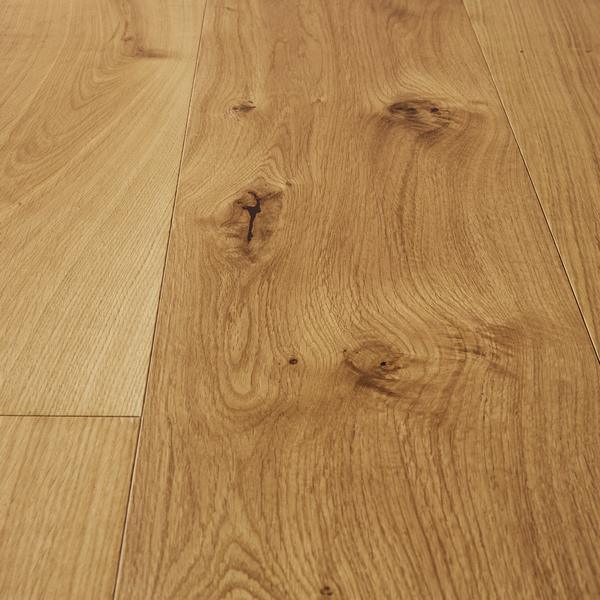
Engineered flooring offers flexibility in how it can be fitted. Boards can be floated over a suitable underlay, bonded directly to a prepared screed, or secret-nailed to joists where thicker boards are used.
Thinner boards, typically around 14–15mm, are commonly floated or bonded, while 21mm boards are suitable for joist installations. This versatility allows engineered flooring to be installed across a wide range of subfloors and building types.
Finishes, Grades, and Board Sizes
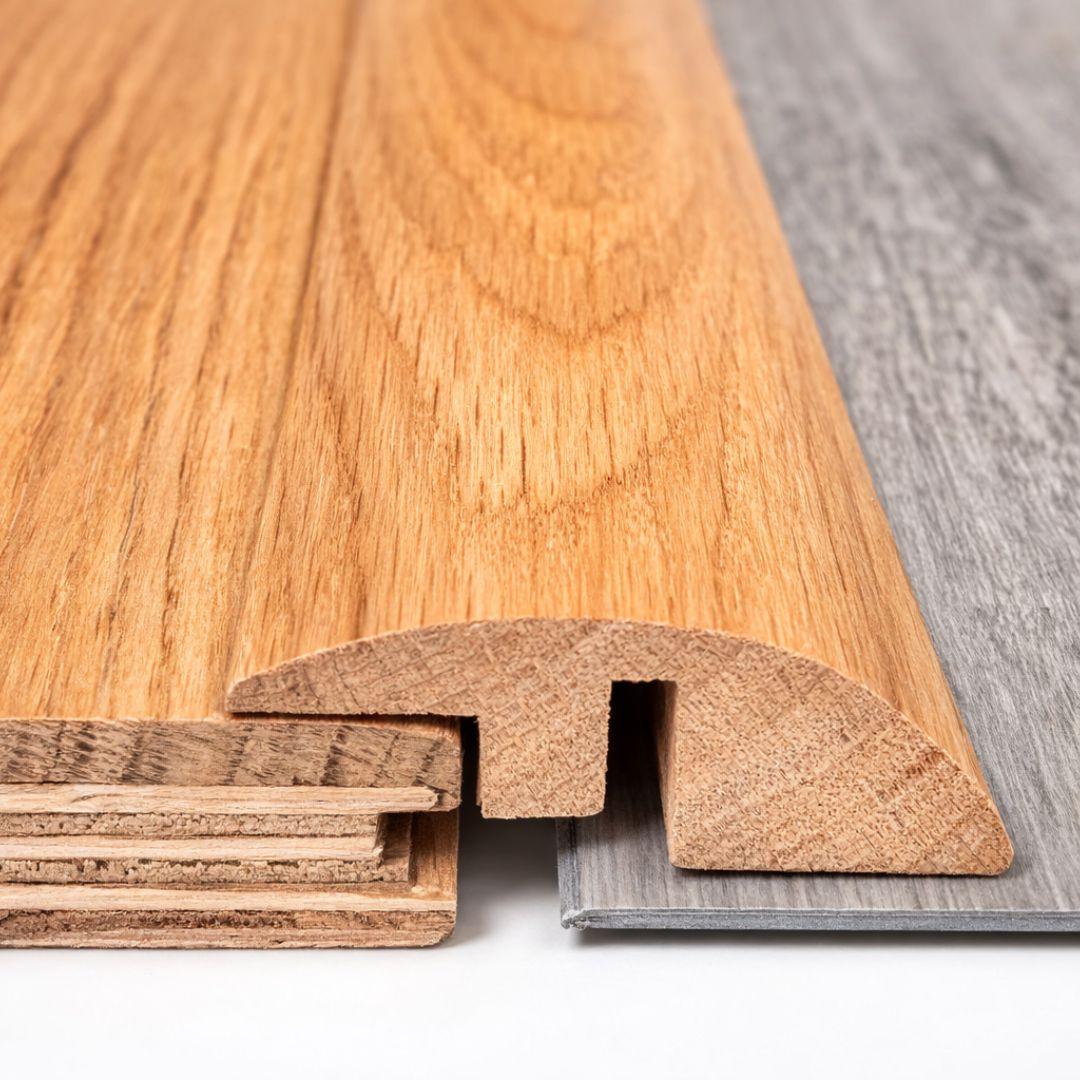
Our engineered flooring is available in both pre-oiled and untreated options.
Many boards are finished with hardwax oils, which protect the surface while preserving the natural character of the timber. Packs typically contain a mixed grade selection, incorporating Prime, Character and Rustic boards for a balanced appearance.
Board widths vary widely, with some options reaching up to 300mm, allowing you to shape the feel of a room. As with all real timber flooring, natural variation in grain, tone, and knotting should be expected, adding depth and individuality to the finished floor.
Why Choose Round Wood Engineered Flooring?
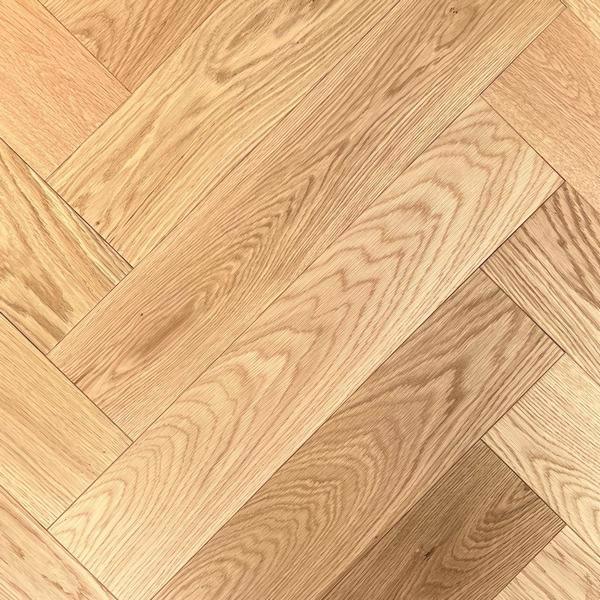
Our engineered flooring is selected for quality, with substantial wear layers and carefully graded oak and walnut boards. With decades of experience working with timber, our flooring team can help you choose the right board, finish, and format for your project.
Free samples are available for anyone to compare tones and textures at home, and we provide reliable nationwide delivery.
Order Your Samples
Seeing the boards in your own space makes choosing far easier. Order free samples to compare grades, tones, and finishes at home, or speak with our flooring team to discuss installation options and suitability for your project.
Trade enquiries are always welcome, and we’re happy to offer guidance before you place an order.
Get in Touch
Frequently Asked Questions
Can engineered flooring be installed over concrete?
Yes. Engineered flooring is frequently installed over concrete subfloors, typically by bonding the boards directly to a prepared screed or by floating them over a suitable underlay. Ensuring the subfloor is dry, level, and protected with an appropriate damp-proof membrane is essential for long-term performance.
Can engineered flooring be sanded and refinished?
Yes, engineered flooring can usually be sanded and refinished, provided the wear layer is thick enough. Most engineered boards include a hardwood wear layer between 3mm and 6mm. This allows the floor to be lightly sanded and re-oiled or refinished at least once, sometimes more, depending on the board and how it has been maintained.
Do engineered boards need to acclimatise before installation?
Engineered flooring is more stable than solid boards and often requires little acclimatisation. In many cases, the boards can be fitted shortly after delivery once the subfloor conditions have been checked. Your installer should always confirm the correct preparation before fitting.
Does engineered flooring expand or move?
All timber floors respond slightly to changes in temperature and humidity. However, the layered construction of engineered boards significantly reduces expansion and contraction compared with solid timber. This improved stability is one of the main reasons engineered flooring is often chosen for modern homes.
How long does engineered flooring last?
With proper installation and care, engineered flooring can last for several decades. Longevity depends on the thickness of the wear layer, the finish applied, and how the floor is maintained. High-quality boards with thicker wear layers provide the greatest potential lifespan.
Is engineered flooring suitable for underfloor heating?
Engineered flooring is widely considered one of the best timber flooring options for use with underfloor heating. The cross-laminated multi-ply core helps control movement caused by temperature changes, making the boards more stable than solid timber in these conditions.
Get in touch
Looking for advice or have a question? You may find the answer in our FAQs here. Alternatively, fill out our quick form below and we’ll put you in touch with the right person in our team! We’ll get back to you by the end of the next working day.

