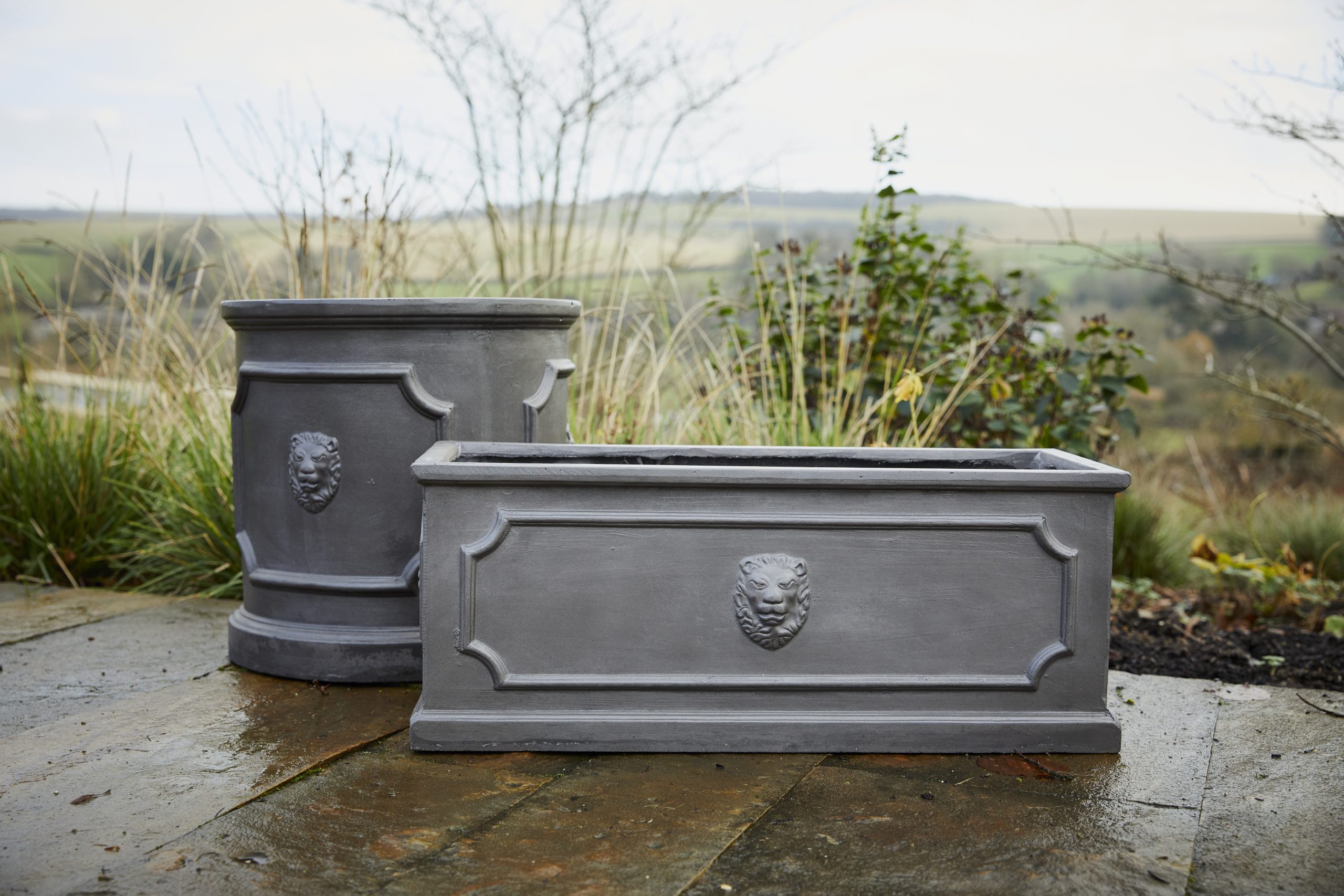

GRC Chelsea Trough
Product Code: P-002203
We believe in the power of premium materials to transform spaces, inside and out.

We strive to deliver your products as promptly as possible, so you can start enjoying them right away.

Our customers are at the heart of everything we do. That’s why we are proud to showcase our Trustpilot reviews.

Shopping with us is straightforward and stress-free. Our dedicated team is just a call or email away if you need assistance.
- Chelsea design grey trough made from Glass Reinforced Concrete (GRC), also known as Glass Fibre Reinforced Concrete (GFRC)
- Incorporates high-strength, alkali-resistant glass fibres in concrete for improved flexibility and durability
- Offers 3–5 times greater flexural strength than traditional concrete for superior resilience
- Up to 80% lighter than standard precast concrete, easing installation and reducing support needs
- Features reinforced walls, drainage holes, and frost- and UV-resistant properties for outdoor durability
- Hand-finished with eco-friendly materials, combining functionality with aesthetic charm
- Stackable when not in use, saving storage space
- Colour, shape, and dimensions may vary slightly (allow 10% variation) due to handmade nature
- Ideal for stylish, long-lasting outdoor planters in various settings
Clayfibre planters are lightweight yet durable, making them easy to transport. Local deliveries are carried out by our fleet of vehicles, while national orders are handled by reliable couriers. Delivery charges are based on the size, weight, and delivery postcode of your order. For more details, please see our Delivery Terms & Conditions.
How to Install Your GRC Planters — Getting It Right From the Start
A GRC planter is built to last a very long time. But like most things worth having, the foundation matters. A well-considered installation — from choosing your spot to preparing the base and getting your planting mix right — sets the stage for everything that follows. Follow these steps and your planter will look exactly as it should, exactly where it should, for years to come.
Start With the Right Location
Before your planter arrives, spend a little time thinking seriously about placement. GRC’s relatively modest weight compared to solid cast concrete gives you real flexibility — but once a large planter is filled with soil, it becomes a permanent fixture in all but name. Consider the following before committing to a spot.
Think about sunlight and aspect first. Match your location to the plants you intend to grow — a sun-drenched south-facing terrace suits very different planting to a shaded north-facing courtyard. Consider sight lines too: a statement planter positioned at the end of a garden path or flanking an entrance will draw the eye and reward the investment far more than one tucked awkwardly in a corner.
Think practically about access for delivery and installation. GRC planters are appreciably lighter than their solid concrete equivalents, but larger pieces still require careful manoeuvring. Narrow gates, steps, and tight turns can all complicate delivery, so plan the route in advance.
Prepare a Stable, Level Base
A stable base is not optional — it’s essential. An uneven surface puts undue stress on the planter body and can, over time, cause structural problems. Before positioning your planter, check that the surface beneath is level, firm, and capable of supporting the combined weight of the planter, growing medium, and plants once fully planted up.
For paved or decked surfaces, check that the area can handle the load. This is particularly relevant for timber decking, balconies, and flat roofs — if in any doubt, consult a structural engineer before proceeding. GRC’s lighter weight makes it a practical choice for elevated spaces, but the loaded weight of a large planter filled with compost is still considerable.
For planters sitting directly on soil or gravel, consider laying a stable pad of compacted hardcore or paving slabs to prevent the planter from gradually sinking or tilting over time.
Elevate for Drainage
One of the most important — and most frequently overlooked — installation details is elevation. Using planter feet or a slight lift where appropriate reduces trapped moisture beneath the planter ModaConcrete, protecting both the base of the planter and the surface beneath it. This is especially important on wooden decking, where trapped moisture accelerates deterioration.
Even a modest lift of 10–15mm using purpose-made planter feet or small non-ferrous packers is sufficient to allow air to circulate, water to escape freely, and the base of the planter to remain dry. It’s a small detail that makes a meaningful long-term difference.
Handle With Care During Positioning
GRC is a resilient material, but it can chip or crack if knocked sharply against a hard edge during installation. Always lift from the base — never drag a planter across a hard surface, and never lever it into position using the rim. For larger, heavier pieces, use a sack truck with padding, or recruit additional help.
If you need to rotate or make fine adjustments to position, lift and replace rather than sliding. Protecting the base and lower edges with offcuts of carpet or foam during manoeuvring is a simple precaution that prevents unnecessary damage before the planter is even planted up.
Check and Clear Drainage Holes
Before adding any growing medium, confirm that the drainage holes are clear and unobstructed. If your planter is sitting on feet, verify that the holes align with a clear escape route for water and are not blocked by the surface beneath.
For planters going onto impermeable surfaces such as paving or concrete, consider the direction that draining water will travel. On a terrace or patio, drainage water carrying soil particles can cause staining if not managed — positioning planters so that water drains away from paved areas, or using drip trays where appropriate, will keep surfaces looking their best.
Protect Against Soil Alkalinity
New GRC, like all concrete-based materials, can initially be mildly alkaline. While quality GRC planters are typically sealed internally, it is good practice to line the interior with a purpose-made planter liner or a layer of horticultural polythene before adding compost. This creates a neutral growing environment, particularly beneficial for acid-loving plants such as rhododendrons, camellias, and blueberries that are sensitive to pH imbalance.
A liner also helps retain moisture around plant roots, reduces the risk of the growing medium drying out too rapidly in warm weather, and protects the interior surface of the planter over the long term.
Choose the Right Growing Medium
Resist the temptation to fill a large planter entirely with standard garden soil. Outdoor planters need a growing medium that balances moisture retention with free drainage. A quality peat-free multipurpose compost, blended with horticultural grit or perlite in roughly a 3:1 ratio, provides the ideal structure for most ornamental planting — nutritious, free-draining, and supportive of healthy root development.
For very large or deep planters, reduce the overall weight and improve drainage by filling the bottom quarter with lightweight aggregate, crocks, or even empty plastic bottles before adding compost above. This keeps the planted weight manageable and ensures the lower depths of the planter don’t become waterlogged.
A Considered Start, a Lasting Result
Installation done well is invisible — everything simply looks right, sits right, and performs exactly as it should. Take the time at the outset to choose the right position, prepare a solid base, ensure good drainage, and plant into the correct growing medium, and your GRC planter will become one of the most rewarding features of your outdoor space.
How to Care for Your GRC Planters — and Keep Them Looking Beautiful for Years
Glass Reinforced Concrete planters are one of the smartest investments you can make for your garden, terrace, or outdoor living space. Combining the timeless, sculptural appeal of concrete with the resilience of glass fibre reinforcement, GRC planters are built to last — and with just a little regular care, they’ll reward you with decades of striking good looks. Here’s everything you need to know to keep yours in prime condition.
Understanding What Makes GRC Special
Before diving into maintenance, it helps to understand what you’re working with. GRC is a composite material — a blend of cement, silica sand, and alkali-resistant glass fibres — that delivers exceptional strength without the punishing weight of traditional concrete. The result is a planter that can handle frost, rain, UV exposure, and the general rigours of British weather, while remaining light enough to reposition when your planting scheme evolves. That said, like all quality materials, it performs best when given a little thoughtful upkeep.
Routine Cleaning: Simple and Straightforward
The good news is that GRC planters are genuinely low-maintenance. For everyday cleaning, all you need is mild soap, warm water, and a soft-bristled brush. Work the solution gently across the surface — paying attention to any textured areas where dirt, moss, or algae might accumulate — then rinse thoroughly to remove all residue.
A few things to avoid: never use abrasive scrubbing pads or harsh chemical cleaners, as these can damage the surface finish and strip any protective sealant that may have been applied. Bleach-based products and acid cleaners are particular culprits, so always check labels before reaching for something unfamiliar. When in doubt, less is more — warm soapy water will handle the vast majority of cleaning tasks without any risk to the planter’s finish.
Sealing: Your Best Defence Against the Elements
Concrete is a naturally porous material, and while GRC’s composition makes it considerably more resilient than standard concrete, periodic sealing is one of the best things you can do to extend its life and preserve its appearance. A quality clear concrete sealant or stone wax, applied once a year, creates a protective barrier that repels moisture, reduces the risk of staining, and helps prevent the mineral deposits that can cause surface discolouration over time.
Before applying any sealant, ensure the planter is thoroughly clean and completely dry. Work the sealant evenly across all external surfaces and allow it to cure fully before exposing the planter to rain or heavy dew. This simple annual ritual takes less than an hour and makes a significant difference to long-term appearance.
Drainage: Don’t Let Water Sit
One of the most important — and most overlooked — aspects of GRC planter care is drainage. Standing water is the enemy of any planter, regardless of material, and GRC is no exception. Waterlogged compost is harmful to plant roots, and prolonged moisture retention can gradually compromise the interior lining of the planter.
Check that your planter’s drainage holes are clear and unobstructed, particularly after autumn leaf-fall or if the planter is positioned where debris may collect. If you’re using liners or placing a pot-within-a-pot arrangement, ensure water can still escape freely. For planters in sheltered spots where water pools rather than drains away, consider raising the planter slightly on feet or discreet spacers to allow free drainage underneath.
Managing Surface Changes Over Time
GRC is designed to age gracefully, but like any natural-look material, some surface variation over time is entirely normal — and often adds character. Very fine surface micro-cracks can occasionally appear as the material settles, particularly in the outer face coat. These are cosmetic rather than structural, and do not affect the integrity or longevity of the planter.
Efflorescence — the white powdery bloom sometimes seen on concrete surfaces — can also appear, caused by water carrying soluble minerals to the surface as it evaporates. This is easily removed with a soft brush and a mild acidic solution such as diluted white vinegar, followed by a thorough rinse. Regular sealing will significantly reduce the likelihood of efflorescence occurring in the first place.
Handling and Moving Your Planters
GRC planters are appreciably lighter than their solid concrete counterparts, but they still deserve careful handling — particularly larger statement pieces. When moving a planted GRC planter, always lift from the base rather than pulling or pushing from the rim or lip, which places undue stress on the upper edge and can cause chipping. For very large planters, use a sack truck or recruit an extra pair of hands rather than attempting to drag the planter across hard surfaces.
During the winter months, GRC planters are generally frost-resistant, but it’s worth ensuring they are not left sitting in pools of standing water during a hard freeze, as water expanding within any small surface pores during freeze-thaw cycles can cause surface damage over time. Good drainage and an annual sealant application are your best preventative measures.
A Long-Term Investment Worth Protecting
A well-maintained GRC planter is far more than a container — it’s a design feature in its own right, one that frames your planting, defines a space, and adds genuine character to a garden or terrace. The effort required to keep one looking its best is genuinely modest: an annual clean, a yearly sealant, and a periodic check on drainage is all it takes.
In return, you get a planter that resists cracking, shrugs off the worst of our British weather, and holds its beauty year after year. Treat it well, and your GRC planter will be a fixture of your outdoor space for a very long time indeed.