
Oak Extensions
Every build is fully bespoke and engineered to suit the proportions and roofline of your property. Options include garden rooms, conservatories, orangeries, gable extensions, and oak balconies, each designed to create practical and usable space with a strong architectural presence.
Explore our oak extension options below.
Oak Balconies
Find out moreWhy Choose an Oak Extension?
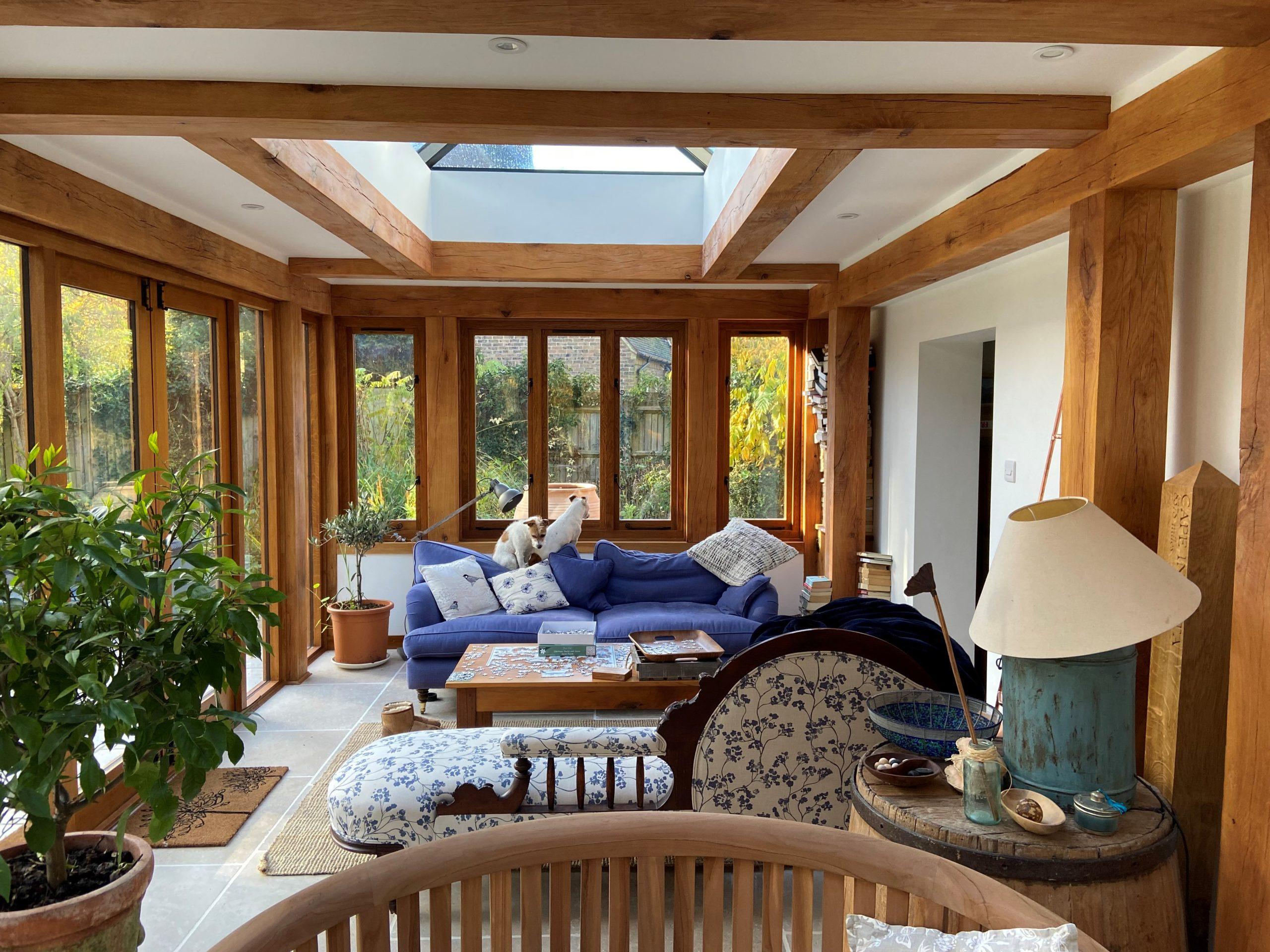
An oak extension can serve as a dining area, living room, workspace, or a simple link between parts of the house. The frame adds strength and a clear sense of structure, while the exposed oak creates a calm interior. Designs can follow the architecture of a period home or sit comfortably against a newer build. Larger openings, glazed gables, and roof lanterns are easy to incorporate, allowing the space to feel open without altering the character of the property.
About the Extension Types We Offer
We design four core extension styles, each built to suit the proportions and rooflines of the existing property.
- Oak garden rooms offer an insulated structure with lanterns set into a solid roof, giving steady daylight and reliable year-round use.
- Oak conservatories use larger areas of glazing, often in lean-to or pitched formats, for a lighter connection to the garden.
- Oak orangeries use a heavier roof form with central lanterns, giving the room more presence and a stronger architectural line.
- Oak balconies and first-floor extensions create elevated outdoor space or additional first-floor rooms, supported by structural oak posts and braces.
Each option can be shaped around the space available and the way the room will be used.
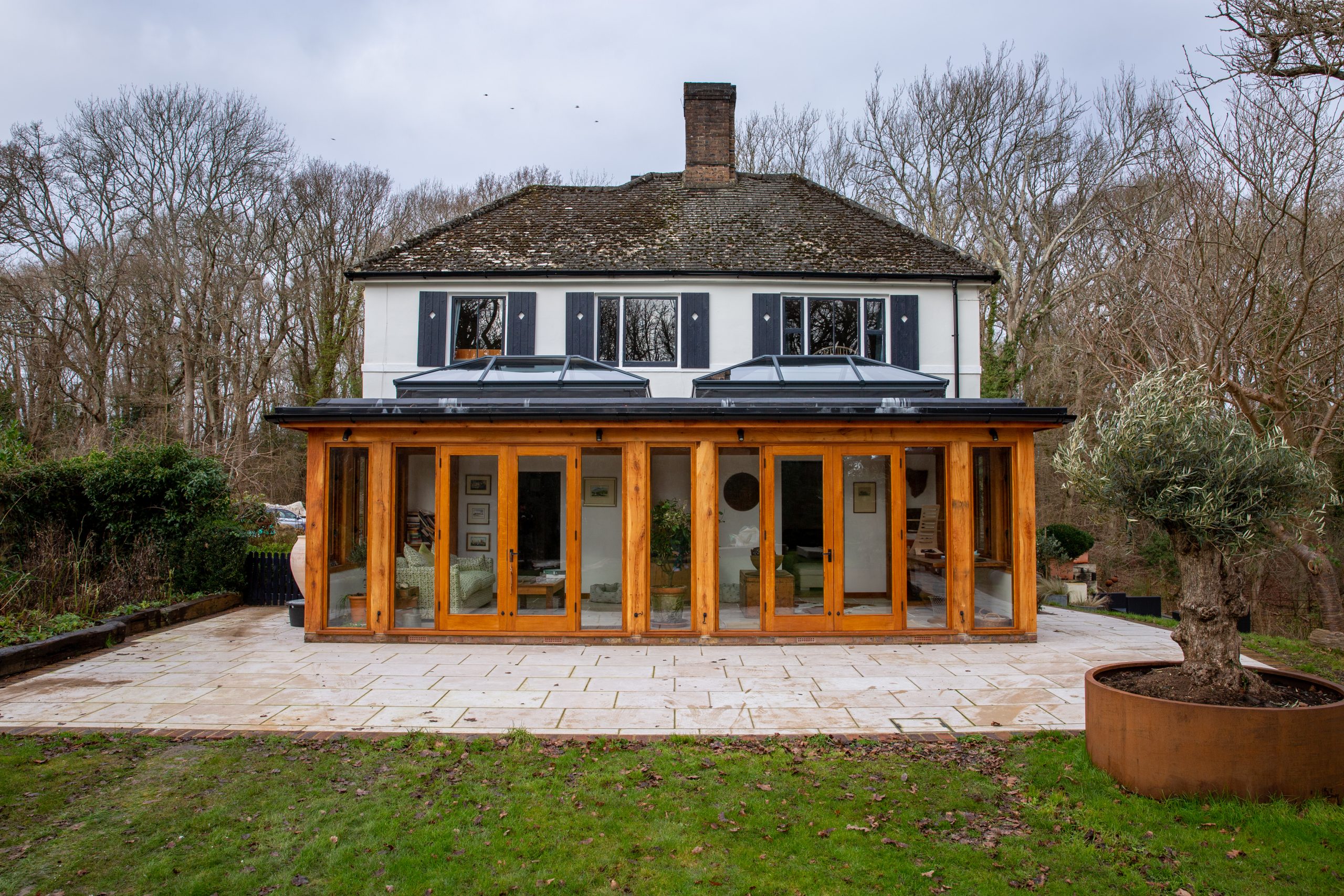
Photo Gallery
Design & Build Options
Every extension is designed around the style and footprint of the house. Roofs can be tiled, slated, glazed, or fitted with pitched lanterns, and we offer a wide range of glazing and joinery options to suit the layout. Our team can work from an architect’s plans or produce all drawings in-house. Structural requirements such as spans, supports, and junctions with existing walls are reviewed early so the frame sits cleanly against the property.
Planning & Building Regulations
Most oak extensions need planning approval, as they add new internal space and change the footprint of the house. Key factors include the size of the extension, roof height, its position on the plot, and whether the property sits in a conservation area or is listed. Smaller conservatories or unheated garden rooms may fall under permitted development, but this depends on the limits that apply to the site.
Building regulations still apply, covering structural work, insulation, fire safety, heating and ventilation. These rules apply even when planning permission is not required.
Our team can prepare planning drawings and work alongside architects or surveyors during the application process. For detailed guidance, it is worth checking our detailed planning guide for extensions or speaking directly with your local authority.

Construction Quality
Our extensions are built from structural green oak using mortise and tenon joints for a solid, reliable frame. Each structure is dry-fitted in our Sussex workshop to confirm accuracy before delivery. Where a design includes wide openings or complex roof junctions, additional supports are incorporated at the framing stage.
All oak is responsibly sourced, and waste is kept to a minimum throughout production. The result is a frame made for long service life with clear structural integrity.

Start Your Oak Extension Project Today
We hold over three decades of experience in designing and supplying bespoke oak extensions for homes, heritage properties, and more complex architectural builds. Our team is known for accurate framing, steady project management, and dependable delivery. We supply nationwide and offer a full build service for local clients.
If you are planning an extension, we can help you shape the design and prepare the frame with clarity from the outset.
Get a Quote
Frequently Asked Questions
Can an oak extension be used all year round?
Yes. Most oak extensions are insulated, heated, and built to the same standard as internal rooms. Garden rooms, orangeries, and many conservatories are intended for daily use rather than occasional use.
Can you match the style of my existing home?
Yes. The frame, roofline, cladding, glazing patterns, and joinery can all be designed to reflect the proportions and materials of the house. Matching brick plinths and roof coverings is also common to keep the extension consistent with the original building.
Do I need planning permission for an oak extension?
Most extensions will need planning approval as they create new internal living space and alter the footprint of the house. Smaller conservatories or unheated garden rooms may fall under permitted development, but this depends on the limits that apply to your property and its setting.
Do you provide planning drawings?
We can produce all drawings required for planning and building regulations or work with plans prepared by your architect. Early involvement helps ensure the design meets both the brief and any planning constraints.
Do you work with external builders?
Yes. We can supply the frame for your chosen contractor to install, or provide a full build service for local projects. Support is available throughout the process, whichever route you choose.
How long does an oak extension build take?
Lead times depend on scale and complexity. Most frames are manufactured within 8–14 weeks once drawings are approved. Installation and finishing times vary depending on the wider build programme.
How much does an oak extension cost?
Costs vary depending on size, roof type, glazing, and the level of fit-out required. A clear estimate is prepared once the design and scope are agreed. Contact us to book a free consultation today – from there, we can review your budget and put a suitable plan together.
What’s the difference between a garden room, conservatory, and orangery?
A garden room uses a solid roof and is designed for year-round use. A conservatory relies on larger areas of glazing and a lighter roof structure. An orangery sits between the two, with a substantial roof form and a central lantern. All three are connected to the house and function as extensions rather than outbuildings.
Get a Quote
Fill out our quick form below and we’ll be in touch shortly about a quote for your dream oak frame building.

