
A Homeowner’s Guide to Timber Flooring Styles, Finishes & Formats
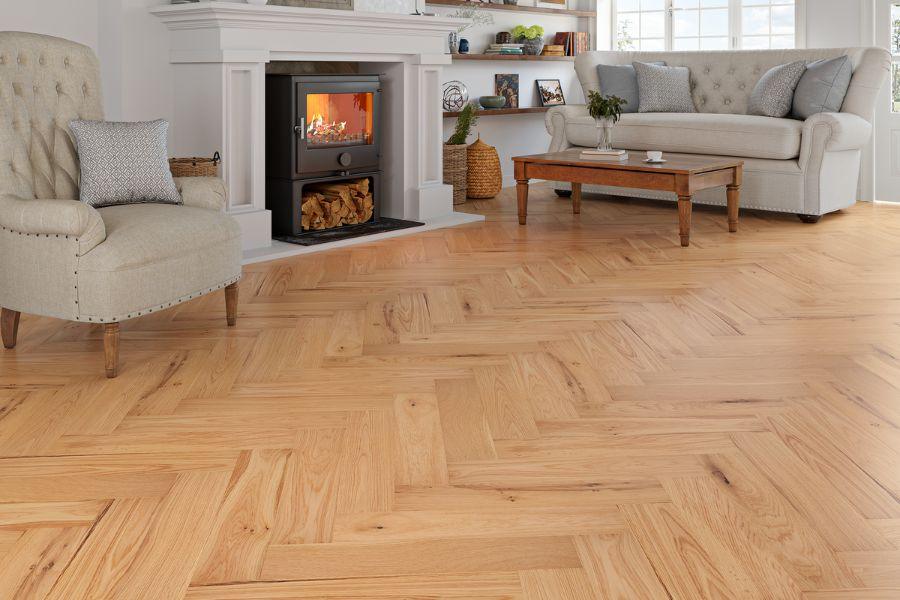
Choosing the right timber floor can feel overwhelming when every option comes with its own terminology. Thankfully, we specialise in high-grade solid and engineered oak, along with walnut, so this guide strips the choice back to essentials: construction, board format, surface texture, finish, and colour.
Free samples are available to help you judge grade and tone in your own light, though natural variation should always be expected.
Solid vs Engineered Wood Flooring
What Solid Wood Flooring Actually Is
Solid oak boards are cut from a single piece of European timber and machined with a tongue-and-groove profile for stability. At around 21–22 mm thick, they form a substantial floor that can be bonded to screed or an existing surface, or secret-nailed to joists when the build allows. Because solid oak responds to changes in temperature and humidity, it must acclimatise in the room for at least two weeks, with a 10–15 mm expansion gap left around the perimeter. A dry, well-prepared subfloor is essential.
Our solid wood ranges illustrate how grade affects the final look.
- Rustic grade shows larger knots and more natural variation.
- Character grade offers a balanced, lived-in look with fewer interruptions in the grain.
- Prime grade delivers the cleanest, most uniform appearance.
All three are supplied smooth and unfinished, allowing you to oil, wax, or lacquer them to suit your scheme. Each is traditionally crafted in-house, with bespoke widths up to 205 mm available, and all require basic on-site preparation such as filling and sanding before finishing.
Solid oak remains a dependable choice for spaces without underfloor heating and for homeowners who prefer the authenticity of a single piece of timber that can be refinished over time.
Why Engineered Boards Aren’t a Compromise
Engineered flooring is built differently but looks identical to solid once laid. Each board is made with a thick oak (or walnut) wear layer bonded to a cross-laminated multi-ply core, which controls movement and makes the floor far more stable in rooms with fluctuating temperature and humidity, including those with underfloor heating. This stability also means engineered boards can be used straight from the pack, without the acclimatisation period needed for solid timber.
Our own engineered planks, such as the Smooth, Pre-oiled Oak, Smooth, Untreated Oak, and Smooth, Pre-oiled Walnut boards, illustrate the flexibility of this format. All use tongue and groove and can be floated, bonded or, on thicker boards, secret-nailed. Thickness varies by installation method: around 21 mm works on joists, while 14/15 mm is suitable for floating or bonding to screed.
Engineered flooring is now often specified in situations where solid oak would traditionally have been used. It delivers the same surface of real timber, with the added advantage of stability, easier fitting, and broader room suitability.
Board Formats
Classic Plank and Wide Plank
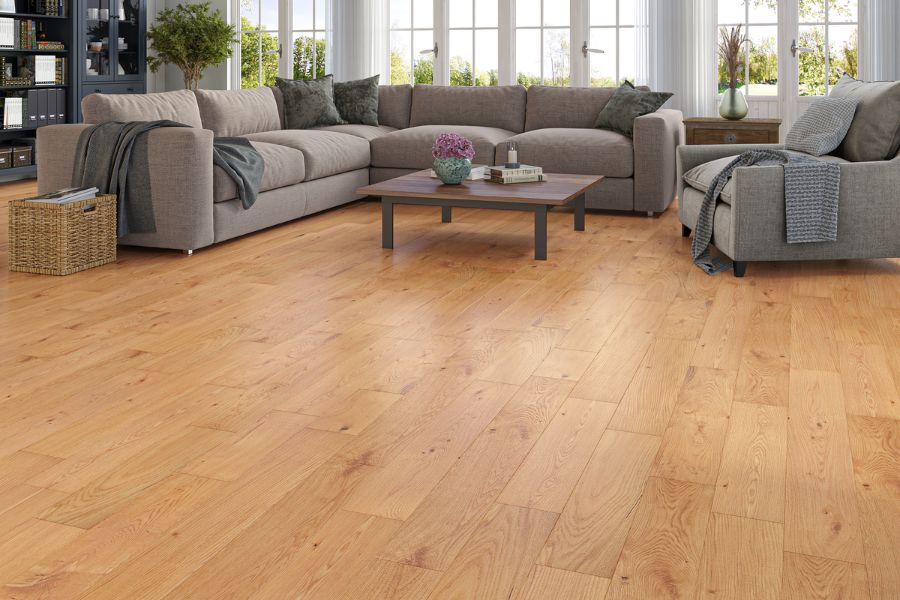
Plank flooring is the most familiar format: long boards laid in parallel runs that create a clean, uninterrupted line through a room. Wider planks shift the emphasis toward grain and tone, giving a calmer, more contemporary feel. They also reduce the number of joints in the floor, which many homeowners prefer in open-plan spaces.
Room size influences the decision, but it shouldn’t dictate it. Wider boards can make a compact room feel more grounded just as easily as they can add scale to a larger space. What matters is how you want the floor to read, with more pattern from narrower planks, or more emphasis on the timber itself with wider ones.
We offer flexibility across both solid and engineered formats:
- Solid boards such as the Character grade Smooth Untreated 205 × 21 mm option can be machined in bespoke widths up to 205 mm, giving you full control over proportion.
- In engineered planks, variations in pack width and length allow you to choose something closer to the tone and texture you want. The Brushed, Pre-oiled Engineered Oak board is a typical example: a lightly textured, mixed-grade plank with tongue and groove all round and a stable multi-ply core suitable for floating or bonding.
Herringbone and Parquet Patterns
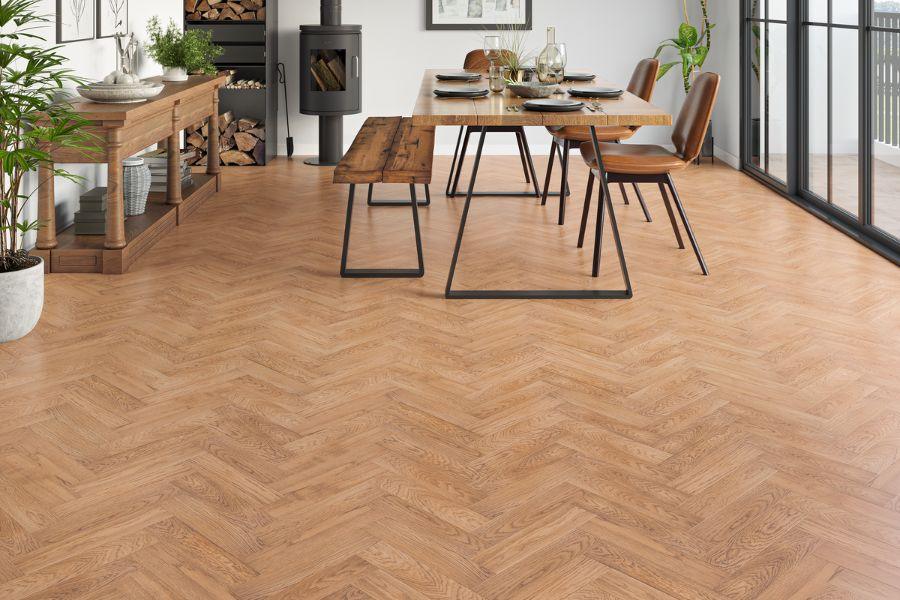
Herringbone introduces deliberate movement. Each short board (or ‘batten’) meets the next at a right angle, creating a rhythmic pattern that suits hallways, living rooms and larger open-plan layouts where you want the floor to act as a design feature rather than a backdrop.
We offer a wide choice of finishes across our herringbone collection:
- Brushed, Smoked, White-oiled boards provide a softened, contemporary take on traditional parquet.
- Unfinished options such as LEXINGTON OAK give you full control over the final tone, allowing oils or lacquers to be applied on site.
- Pre-finished variants cover the full spectrum: BEAUMONT OAK in a UV-lacquered finish for a sealed, low-sheen look; HUDSON OAK UV-oiled for a more natural surface; and ASHEVILLE OAK, finished with an invisible oil that preserves the raw appearance of oak while adding protection.
Collectively, these formats give you broad scope, from understated planks to expressive geometric patterns, while keeping the same reliable European oak at the core.
Surface Textures
Texture changes how a floor feels underfoot and how it behaves in natural light. Two boards of the same timber and colour can look entirely different once installed, simply because one is brushed or distressed and the other is smooth. This section breaks down the main textures available and how they influence day-to-day use.
Smooth Boards
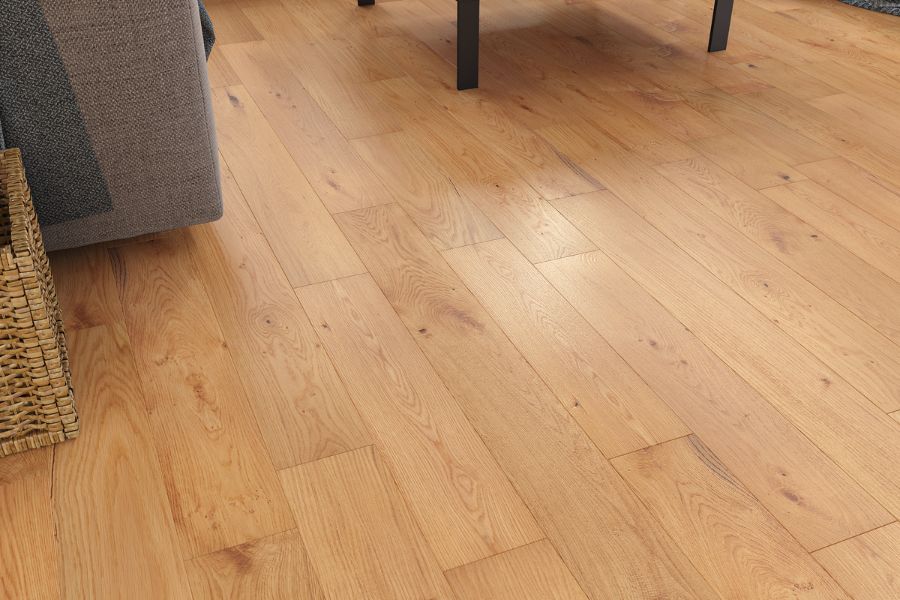
Smooth, planed boards offer the cleanest presentation of oak. The surface is even, the grain is clearly defined, and the finish reads as calm and minimal. This makes smooth flooring a strong fit for more formal rooms or schemes where you want the timber to appear refined rather than rustic. Because the surface is flatter, it shows the true colour of the wood and responds predictably to oils and lacquers. The trade-off is that scuffs and marks may be more visible in busy family zones, particularly in lighter finishes.
Our smooth options cover a wide range of tones:
- Smooth, Natural-oiled Engineered Oak is a straightforward choice that works in most interiors, with a mixed-grade pack, a natural hardwax oil finish, and a stable multi-ply core.
- Smooth, Pre-oiled Oak offers similar clarity, with the same tongue-and-groove construction and pre-applied protective oil.
- For a sealed surface, ORKNEY SHORE Smooth, HD Natural-lacquered adds a more durable lacquer while keeping a traditional look.
- And at the richer end of the spectrum, Vintage Collection EALDWINE Smooth, Pre-oiled gives you a deep smoked brown tone with cobbled and flamed edges for added character.
Brushed Boards
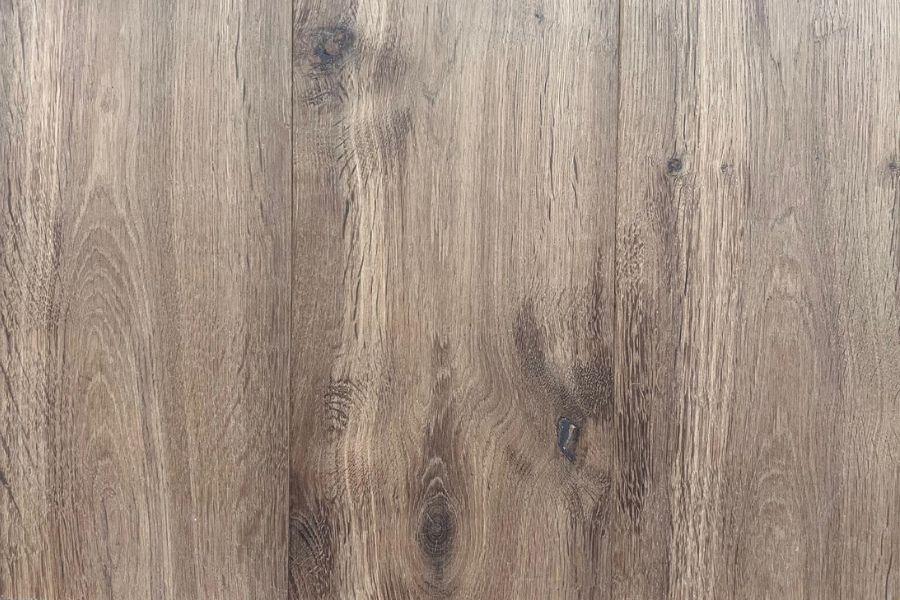
Brushed boards are created by removing the softer fibres from the surface, leaving the harder grain slightly raised. The result is a subtle texture that catches light well and does a better job of masking everyday scuffs. Brushing also introduces a more tactile feel underfoot without making the floor overtly rustic.
Our brushed options span several finishes:
- The Brushed, Pre-oiled Engineered Oak board offers a lightly textured surface coated with hardwax oil, with all knots filled and sanded for a consistent look.
- For a brighter tone, the Brushed, White-oiled board combines brushing with a smoked and white-oiled finish, then seals it with a clear hardwax topcoat. This softens the grain and pulls the colour towards a modern, coastal feel while maintaining the warmth of oak.
- Where a more ‘bare wood’ appearance is preferred, the Brushed, Invisible-lacquered board provides the texture of brushing with the protection of lacquer, but without the visible sheen. The floor looks untreated while still benefiting from a durable factory-applied seal.
- For full control over colour, the Brushed, Untreated option leaves the oak ready for finishing on site. The boards arrive lightly brushed, with knots filled and the same stable multi-ply core beneath. Oils, hardwax finishes, or lacquers can then be applied to suit your project.
Distressed and ‘Aged’ Surfaces
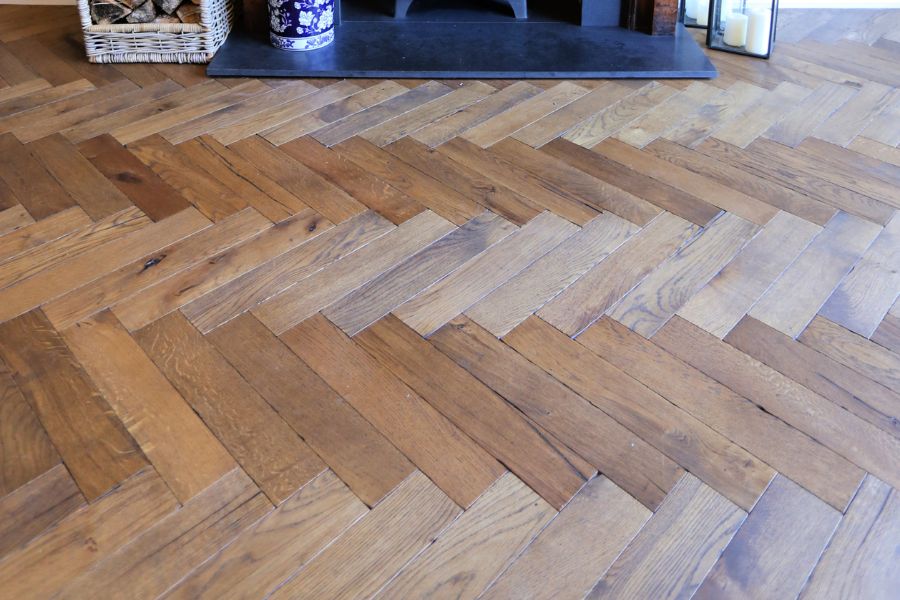
Distressed boards are designed to look lived-in from the moment they go down. Techniques such as tumbling, hand-cracking, edge-flaming and surface distressing introduce irregularities that would naturally appear over decades. These floors suit cottages, barn conversions and busy homes where the aim is character rather than perfection.
- The GENERAL’S HOUSE Distressed, Pre-oiled board is a high-end example, combining a tumbled and cracked surface with hand-finished detailing and a 6 mm wear layer.
- SHUSTOKE FARM Distressed, Wax Oil offers a similar aged quality, with part-filled knots and flamed edges for a reclaimed appearance.
- For a more refined antique look, the Distressed, Light Antique Brown Wax-oiled board provides a brushed, cracked texture with a warm brown tone.
All of these options rely on the same stable engineered structure, making them practical as well as characterful.
Saw-Marked and Cobbled Edges
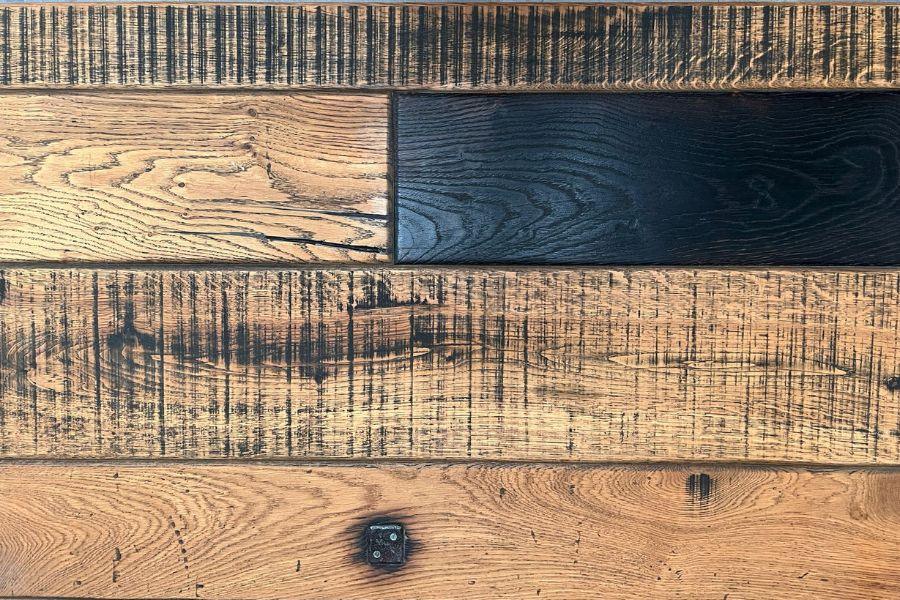
Saw-marked boards display visible saw lines from the milling process, giving the floor a workshop or reclaimed-timber feel. This texture adds movement and visual interest, particularly in larger spaces. Edges can also be worked for additional character: cobbled, flamed, or fettled edges soften the outline of each plank and create a more handmade quality.
- The TREVITHICK Saw-marked, Pre-oiled board combines saw lines with iron-cobbled and flamed detailing for a bold, statement look.
- For a lighter touch, the Brushed, Saw-marked, Wax-oiled (Colour 9) board blends brushing with saw-marks and a warm wax-oil finish.
- A crisper version of this texture appears in the Brushed, Saw-marked, UV-lacquered (Colour 8) board, which uses lacquer for a more durable, less absorbent surface.
Even smooth boards can feature edge-work:
- Vintage Collection EALDWINE, though smooth-faced, uses heavy cobbled and flamed edges to create a borderline reclaimed aesthetic while retaining a clean top surface.
Together, these texture options give you control over how refined or expressive the floor should look – and how forgiving it will be in daily use.
Finishes and Sheens
Finishes influence not only how a floor looks on day one, but how it behaves over years of use. Some sit within the grain and emphasise timber character; others form a protective layer that resists wear. Understanding the differences makes it easier to choose a finish that matches both your aesthetic and your maintenance expectations.
Pre-Oiled Floors
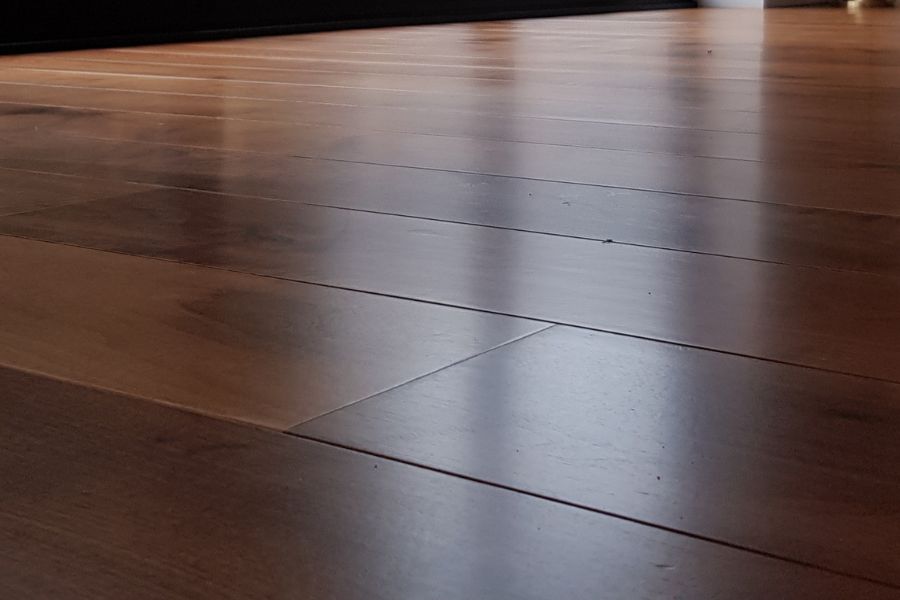
Pre-oiled boards have their finish worked directly into the timber rather than sitting on top of it. This produces a natural look with visible grain definition and makes ongoing care straightforward – as small scratches can often be spot-repaired without refinishing the entire floor.
Many of our pre-oiled boards use hardwax oils, which offer both warmth and durability.
Examples include:
- The Smooth, Pre-oiled Engineered Oak board, a mixed-grade plank with a clean surface and natural hardwax oil finish.
- The Brushed, Pre-oiled version adds light texture while keeping the same stable multi-ply core and hardwax oil protection.
- And for a more characterful choice, TREVITHICK Saw-marked, Pre-oiled combines saw-marks, cobbled and flamed edges, and a protective hardwax oil coating over a 6 mm wear layer.
With all pre-oiled floors, a top-up coat after installation is often recommended to seal the joints and maximise longevity.
UV-Oiled and UV-Lacquered
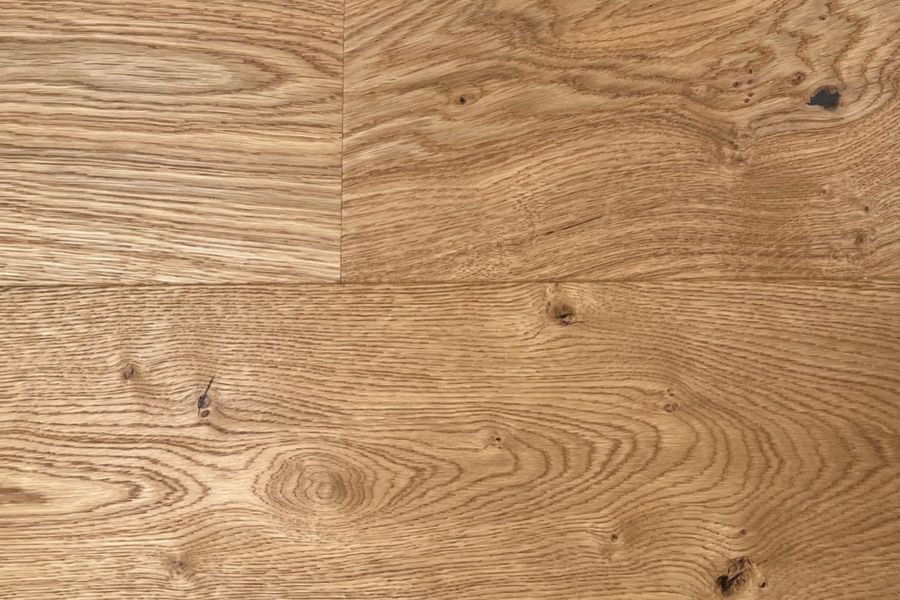
UV-cured finishes are applied and hardened in the factory, resulting in a consistent, highly durable surface that requires no on-site drying. They are ideal for busy rooms or projects where a predictable, uniform sheen is preferred.
UV-oiled boards retain a natural appearance, as the cured oil sits within the grain. They offer more protection than standard oils while keeping the timber’s matte look.
- Our Brushed, UV-oiled plank shows this well, pairing a subtle brushed texture with a UV-oiled surface that highlights grain variation.
UV-lacquered boards create a more sealed surface that is easy to wipe down and more resistant to surface wear.
Options include:
- Brushed, UV-lacquered boards in Colour 1, 3 and 4, each offering a different tone while keeping the same cross-bonded multi-ply backing and filled knots.
- For a smoother finish, ORKNEY SHORE HD Natural-lacquered provides a refined lacquered surface with a traditional wax-sheen effect.
These finishes also extend into herringbone formats:
- BEAUMONT OAK delivers a UV-lacquered parquet in rich natural tones, while HUDSON OAK and CAMDEN OAK use UV-oils for a softer, more natural look.
- ASHEVILLE OAK, finished with invisible oil, offers a raw-oak aesthetic with the practicality of a factory-sealed parquet.
Invisible Lacquer and ‘Bare Wood’ Looks
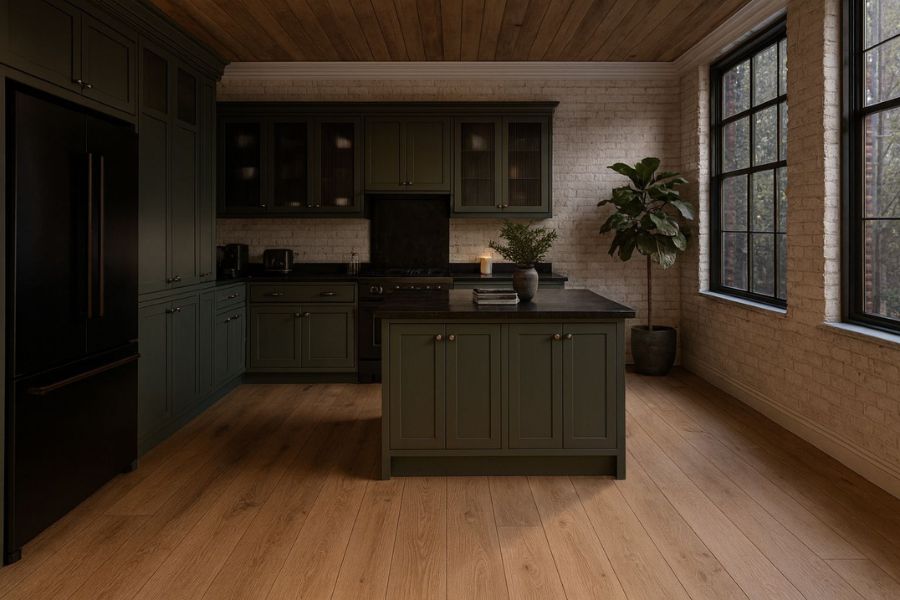
Invisible lacquer offers the protection of a lacquered surface without the typical reflective sheen. It is designed to mimic the look of raw oak while providing a hard-wearing seal that resists moisture and everyday use.
- The Brushed, Invisible-lacquered engineered plank achieves this by pairing a lightly textured brushed surface with a matte, non-discernible lacquer layer.
- For herringbone layouts, ASHEVILLE OAK Invisible-oiled provides a similar ‘bare wood’ appearance, using an oil-based formulation that protects without altering the natural tone of the oak.
These finishes appeal to homeowners who want the minimal, untreated look but not the maintenance demands of genuinely unfinished boards.
Unfinished Boards for On-Site Custom Finishing
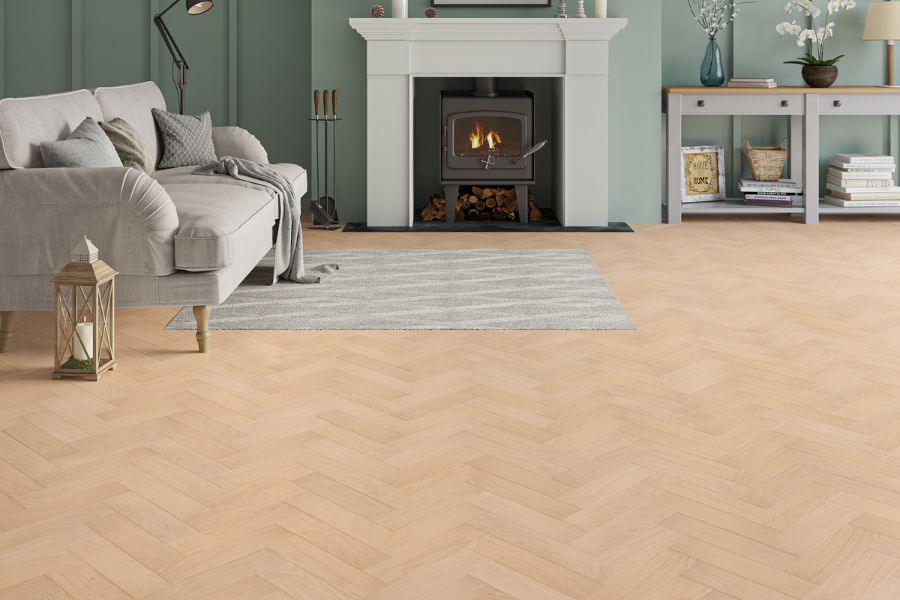
Unfinished boards give full control over colour, sheen, and maintenance. They arrive sandable and ready to take oils, stains, hardwax treatments, or lacquers – making them ideal for projects where you need to match existing joinery or specify a precise tone.
We offer unfinished options across both plank and parquet formats:
- Smooth, Untreated Engineered Oak provides a clean starting point, while the Brushed, Untreated board introduces a subtle texture ready for oils or waxes.
- In herringbone, LEXINGTON OAK arrives smooth and uncoated, allowing custom finishing on site. MONTPELLIER OAK, an unfinished straight plank, offers similar flexibility in a longer board format.
Unfinished timber pairs well with finishing systems such as Treatex, which can be tinted for colour and then sealed with a clear matt or satin coat.
Colour Stories
Colour often drives the first instinctive response to a floor. Some schemes need warmth, others need calm, and others rely on richer tones for definition. Grouping floors by colour direction makes it easier to narrow the field and choose boards that support the atmosphere you want to create.
Natural Oak and Light Honey Tones
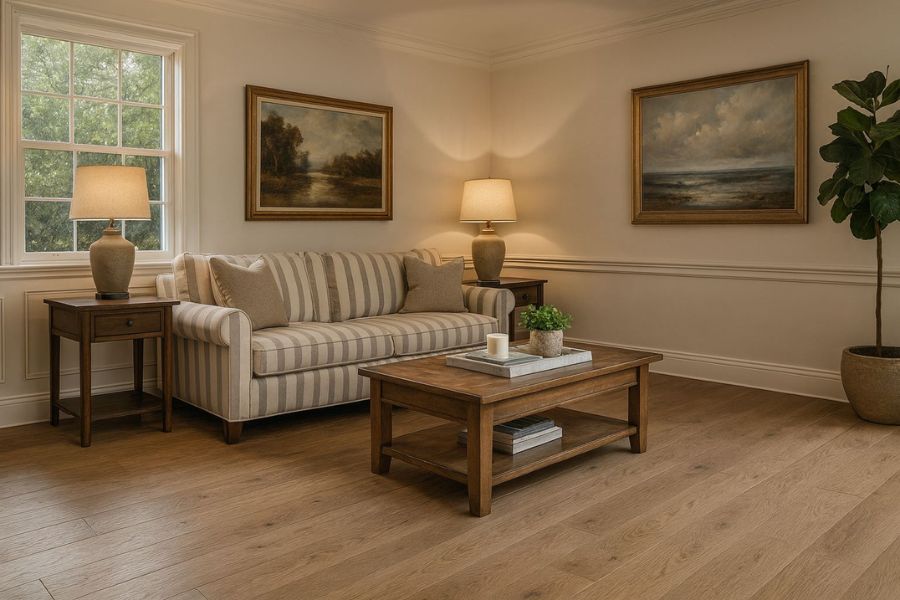
Natural oak sits comfortably in almost any setting. Its light honey tone softens with age, developing a gentle patina without drifting too far from its original colour. These floors pair easily with both traditional and contemporary interiors and usually work well across multiple rooms.
- The Smooth, Natural-oiled Engineered Oak plank keeps the character of the timber front and centre, using a hardwax oil that enhances the grain without adding shine.
- For a slightly more defined surface, HARTFIELD Matt Lacquered offers a brushed texture with a low-sheen lacquer that balances protection with a natural appearance.
- Wider boards such as FARWAY UV-oiled lean into a clean, uninterrupted grain pattern and suit open spaces where continuity matters.
- CLEVELAND Matt Lacquered adds depth through a subtle stain while keeping a natural oak foundation.
- At the paler end of this group, YSTAD UV-oiled introduces a soft, white-washed tone that brightens a room without losing the warmth of oak.
Smoked and Darker Aged Looks
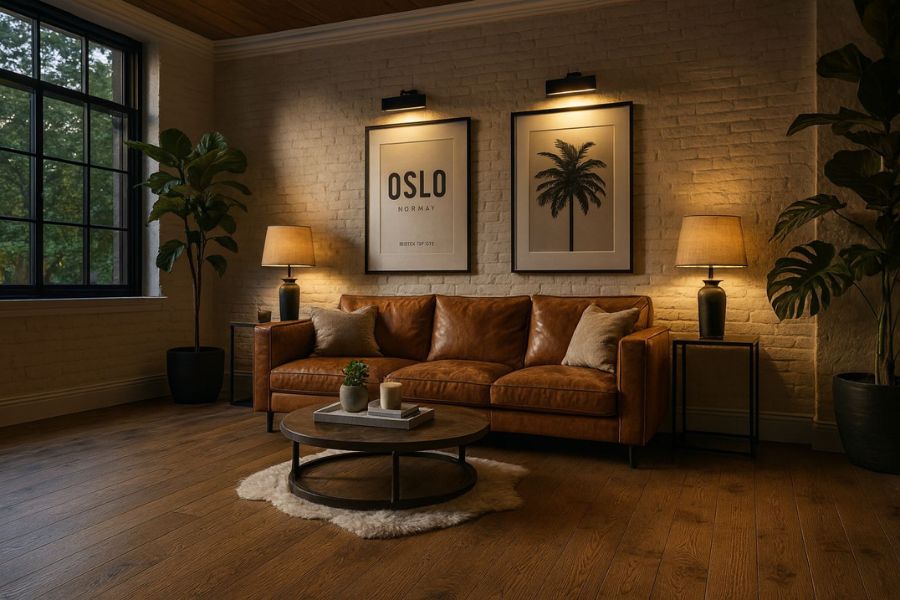
Smoking alters the colour of oak through the full depth of the wear layer, producing tones that are richer and more dramatic than surface stains alone. These floors sit naturally in period homes but can add structure and gravitas to modern spaces as well.
- The Vintage Collection EALDWINE board is the most traditional of these choices, combining a deep smoked brown-red tone with cobbled and flamed edges.
- For something lighter but still atmospheric, Brushed, Smoked, White-oiled Herringbone pairs a smoked base with a white-oil topcoat, creating a cooler, more contemporary finish.
- Colour-driven options include CHELDON Cognac-stained, Oiled, where a hand-scraped surface and warm cognac tone produce a strong, established look.
- For homeowners who prefer a textured aesthetic, GENERAL’S HOUSE Distressed, Pre-oiled and SHUSTOKE FARM Distressed, Wax Oil offer tumbled surfaces, flamed edges, and hand-filled cracks for a convincingly aged appearance.
Limed, Greyed and Ice White Floors
Limed and greyed finishes soften the contrast in oak grain and give floors a cooler, more contemporary edge. These tones help bounce light around a room and lean naturally toward Scandinavian and coastal interiors.
- Grey-washed parquet such as RATTON Grey-limed Herringbone introduces subtle cool tones while keeping a natural oak base.
- For a crisper, paler effect, ALBUS Ice White uses a brushed, UV-oiled finish to achieve a clean white limed look, while NAPA Ice White delivers the same aesthetic in a smaller herringbone block.
These finishes work well in airy rooms where you want the floor to sit quietly beneath stronger decorative elements.
Rich Walnut
Darker timbers lend a sense of formality and weight. Walnut, in particular, offers a naturally rich brown tone with flowing grain variation that reads as polished and high-end.
The Smooth, Pre-oiled Engineered Walnut plank exemplifies this, combining a deep natural colour with the stability of an engineered construction. Its warm tone sits comfortably in studies, dining rooms, and more refined living areas.
Getting Thickness Right
Board thickness affects both stability and how the floor is fixed. Solid oak is usually 21–22 mm and can be glued to screed or an existing surface, or secret-nailed to joists where the structure allows. Engineered boards follow a simpler rule: 21 mm boards are suitable for joists, while 14–15 mm boards are intended for floating or bonding to a prepared subfloor. These guidelines ensure the wear layer performs as intended and the floor remains stable across seasonal changes.
Fitting Methods by Board Type
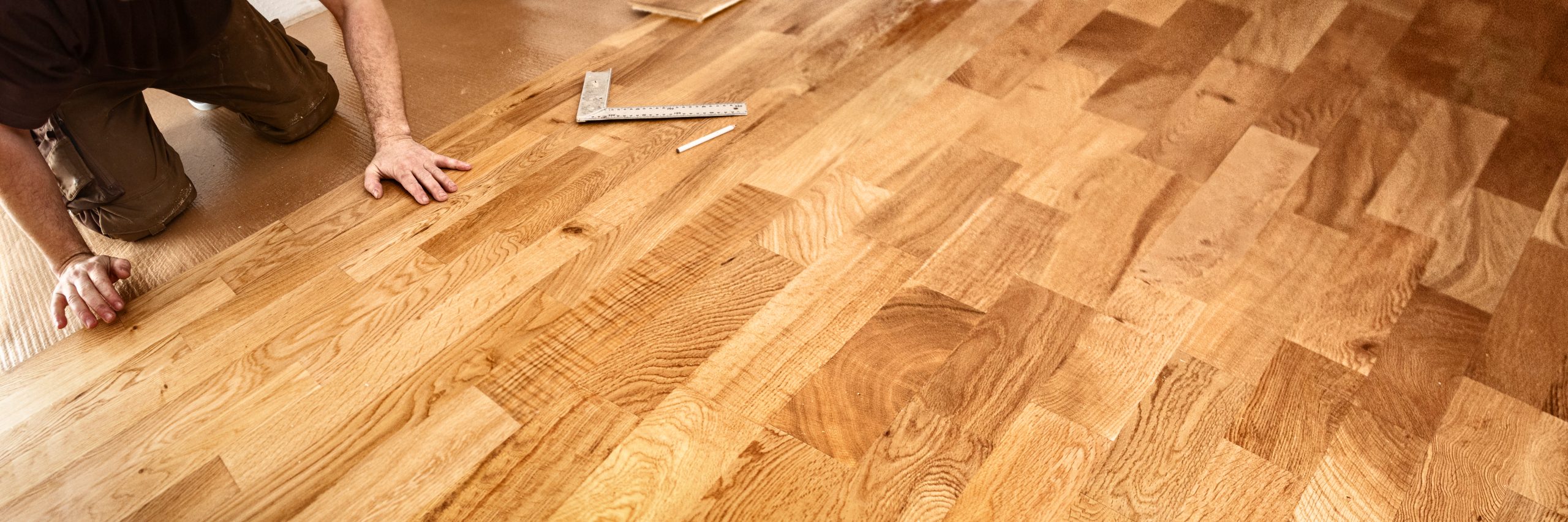
Most engineered floors can be floated over an underlay, bonded directly to the subfloor, or secret-nailed if the board thickness permits.
- Floating is quick and reduces noise transmission when paired with the right underlay.
- Bonding offers the firmest feel underfoot and is often preferred over screed.
- Secret nailing is used on joists or timber substrates.
Remember: moisture should be as low as possible – 2% is recommended for screed – to prevent movement in the boards. A damp-proof membrane helps protect both timber and adhesive, and priming the screed improves adhesion and long-term stability. Expansion gaps must also be left around the perimeter to accommodate natural movement, especially with solid oak.
Allowing for Wastage and Ordering Samples
A 10% wastage allowance is a reliable rule when calculating how much flooring to order. This covers offcuts, pattern alignment, and boards set aside during fitting.
Free samples help refine both grade and finish choices. They show colour, grain, and texture in your own light, and highlight the natural variation expected with timber flooring. Samples ensure the decision is made with the board in hand rather than on screen – which leads to more confident final selections.
Some Must-Have Flooring Accessories
We also supply the various accessories needed to complete the job, such as underlays, adhesives, and primers for a secure installation, Treatex oils for final protection, and trims or skirting to finish the edges cleanly. These ensure that once the boards are down, the floor performs as well as it looks.
How to Narrow Your Choice
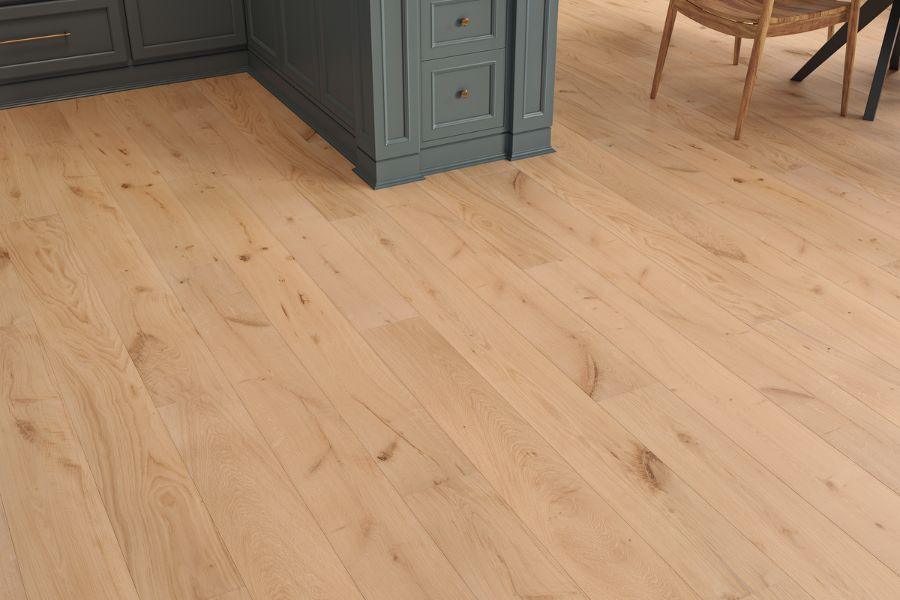
Choosing a timber floor becomes far easier when you follow a clear sequence.
- Start with construction. Solid oak suits dry rooms without underfloor heating, while engineered boards handle temperature shifts and wider installation conditions.
- Next, decide on the format. Planks give a steady, linear look; herringbone introduces pattern and works well in circulation spaces or larger rooms.
- From here, focus on texture. Smooth boards feel clean and direct. Brushed boards soften surface glare and hide wear. Distressed or saw-marked boards add character and suit homes where signs of use are expected.
- Then choose a finish. Oiled for a natural feel, lacquered for a sealed surface, invisible finishes for a raw-oak look, or unfinished if you want full control.
- Finally, settle on colour. Natural oak, smoked tones, limed whites, greys, or darker aged looks will each set a different mood.
Sampling is the quickest way to confirm these decisions. Ordering two or three contrasting sample boards is the quickest way to confirm these decisions. Perhaps a Brushed White-oiled option, a Distressed Wax-oiled board such as SHUSHTOKE FARM, and a smoked choice like EALDWINE, for example.
Seeing the boards in the room removes guesswork and anchors the final choice.
Next Steps and How We Can Help
Choosing a floor doesn’t require mastering every technical term. If anything feels unclear, our flooring team can close the gaps quickly. Free samples are available by phone (01435 867 072) or through the contact form below, and they remain the most reliable way to judge grade, texture, and colour in your own space.
Order your free samples today →
Frequently Asked Questions
Underfloor heating and room suitability
Can I use your timber flooring with underfloor heating?
Yes, our engineered oak and walnut boards are suitable for most warm-water underfloor heating systems. Solid oak is not recommended. Your installer should follow the UFH supplier’s guidelines on build-up, commissioning, and maximum surface temperatures.
Is timber flooring suitable for kitchens and bathrooms?
Engineered boards are usually the better choice in rooms with higher humidity or occasional splashes. Good extraction, careful detailing around wet areas, and prompt cleaning of standing water are all important.
Care, cleaning and re-oiling
How do I clean my timber floor day to day?
Hoover or sweep regularly, then use a damp (not wet) mop with a pH-neutral cleaner recommended for timber floors. Avoid steam mops and harsh cleaning solutions.
How often will I need to re-oil my floor?
It depends on traffic and how you use the room. As a guide, most oiled floors benefit from a maintenance coat every few years in main living spaces, and sooner if the surface starts to look dry or patchy.
Products such as Treatex hardwax oils can be used for both initial finishing and maintenance coats.
Sanding, refinishing and repairs
Can your floors be sanded and refinished in future?
Solid oak can be sanded multiple times over its life. Engineered boards have a defined wear layer, so they can usually be sanded and refinished at least once, sometimes more, depending on thickness and how the floor has been treated over time.
What happens if a board is badly damaged?
Local surface marks can often be repaired with spot sanding and oil or lacquer. For more serious damage, a competent fitter can usually remove and replace individual boards.
Subfloors, acclimatisation and timing
Do your boards need to acclimatise before fitting?
Solid oak should always be acclimatised in the room for at least two weeks, with the subfloor dry and stable. Engineered boards are more stable and can often be installed after about 48–72 hours, once the subfloor has been checked and prepared.
What subfloors can I install over?
Properly prepared screed, existing timber floors, and suitable sheet materials are all typical substrates. The key is moisture content, flatness and using the right method: floating over underlay, bonding, or secret nailing, depending on the board type.
Orders, quantities and lead times
How much extra flooring should I allow for wastage?
We recommend allowing around 10% on top of your net room area to cover offcuts, pattern alignment, and boards put aside during fitting.
Do you hold all products in stock?
Some ranges are stocked for quick dispatch, while others – especially specialist or high-end collections – may be manufactured to order. Our team can confirm current lead times when you request a quote or samples.
Get a Quote
Looking for advice or have a question? Fill out our quick form below and we'll put you in touch with the right person in our team! We'll get back to you by the end of the next working day.

